
Muscogee County Warrant Records
The main online path for Muscogee County warrant records is the Muscogee eCourt Smart Search. The portal includes an option to include warrant records and lets a user filter by warrant type, warrant status, issue-date range, location, record number, or a party name. Locations exposed in the portal include Jail, Municipal Court, Probate Court, Recorder's Court, State Court, Superior 1, and Superior Court, which matters because a bench warrant from Recorder's Court is not the same record as a Superior Court felony warrant.
No separate official active-warrant list was located on the captured Muscogee County Sheriff's Office pages. That means the search path should not stop at a web name search. If Smart Search does not confirm the warrant, use the issuing court, the Sheriff's Office non-emergency line, or the sheriff's open-records custodian for public warrant-related records that can be released. Some warrant information may be held back because of sealed filings, juvenile limits, law-enforcement safety, or a pending investigation.
The Sheriff's open-records request page lists the records custodian email as mcsoorr@columbusga.org and accepts requests by mail or in person at the Sheriff's Office. That channel is useful for public booking, incident, jail, and law-enforcement records not displayed in the court portal. It is not a substitute for legal advice or final warrant-clearance instructions.
Types of Muscogee County Warrants
Muscogee County warrant records can come from several courts. A judge may issue an arrest warrant when probable cause supports an arrest. A bench warrant usually follows a missed court date, unpaid court obligation, or failure to obey a court order. A capias directs law enforcement to bring a person before court. A search warrant authorizes a search, but the warrant and return may be sealed or delayed from public access while an investigation is active.
- Arrest warrant - A judge-issued order tied to an alleged offense, charge, or criminal investigation.
- Bench warrant - A court order often issued after failure to appear, contempt, or noncompliance with a court directive.
- Capias - An arrest order that directs officers to bring a person before the court.
- Traffic warrant - A Recorder's Court or related failure-to-appear matter that may arise from an unresolved citation.
- Search warrant - A court order for a search, often less public while the case is still active.
Municipal Court is important for some Muscogee County warrant questions because the official court map says it handles bad-check warrants, abandonment warrants, distress warrants, and criminal committal functions. Recorder's Court is important for traffic cases, ordinance cases, and bench-warrant issues after a missed appearance.
How to Search Muscogee County Warrants
Start with the court portal when the warrant may be tied to a public case. Smart Search is the same Tyler portal used for Muscogee court records, and it can search by record number or name in "Last, First Middle Suffix" format. It requires JavaScript, cookies, and a supported browser for normal use. If the portal fails or does not expose a warrant, move to the issuing court or the Sheriff's Office records channel.
- Open the Clerk's Court Portal page and choose Smart Search.
- Enter a record number or a name, then expand Advanced Filtering Options if the first search is too broad.
- Use the Include filter for Warrants and narrow by location, such as Recorder's Court, State Court, Superior Court, Municipal Court, or Jail.
- Add warrant status, warrant type, or issued-date filters when the portal makes those controls available.
- Confirm the match with the court or sheriff before treating it as active, cleared, or safe to ignore.
Georgia.gov's Super Speeder page notes that nonpayment of a Super Speeder fee within 120 days can lead to license suspension. The same state traffic consequence can exist alongside a local Recorder's Court case, so a driver may need to check both the court record and the state driver record.
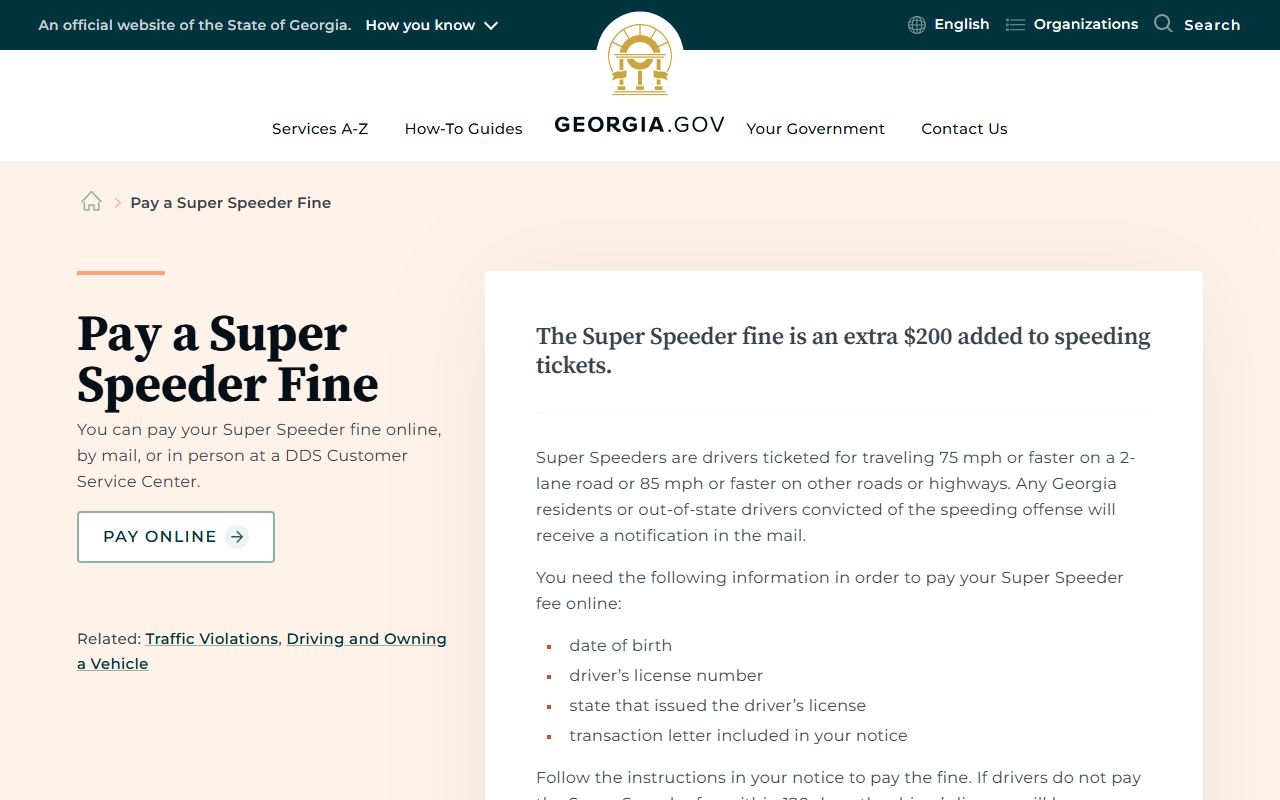
That state notice is not a Muscogee County warrant list, but it shows why traffic-related court records and license records should be checked together when a missed payment or missed court date is part of the problem.
Muscogee County Warrant Search Fields
The official research captured the warrant controls exposed by Smart Search. The system did not expose a live warrant result or sample warrant record in a crawlable public view, so the table below should be read as a search-field inventory, not a list of guaranteed result fields.
| Field Label | Type | Required | Notes |
|---|---|---|---|
| Include Warrants | Checkbox/filter | Optional | Adds warrant records to Smart Search results. |
| Filter by Warrant Type | Dropdown/filter | Optional | Specific options were not exposed in the static crawl. |
| Filter by Warrant Status | Dropdown/filter | Optional | Useful for active or closed status when the portal provides values. |
| Filter by Warrant Issued From | Date | Optional | Sets the start of the warrant issue-date range. |
| Filter by Warrant Issued To | Date | Optional | Sets the end of the warrant issue-date range. |
| Name / record number | Text | Required for useful search | Use a record number or name in Last, First Middle Suffix format. |
| Location | Dropdown/filter | Optional | Includes Municipal Court, Recorder's Court, State Court, Superior Court, Jail, and Probate Court. |
What Muscogee County Warrant Records May Show
No official active-warrant list or sample warrant record was found in a public, accessible page. When a warrant is tied to a public court case, the safest reading practice is to confirm the exact fields in Smart Search and then call the issuing court if any action is needed. Public case records often separate warrant data from charges, hearings, judgments, and jail custody, so a single search result may not tell the whole story.
| Field | How to Treat It |
|---|---|
| Case or record number | Use it to confirm the court file and avoid name-match errors. |
| Warrant type | May distinguish arrest, bench, capias, or other warrant categories. |
| Warrant status | Must be verified with the court or sheriff before relying on it. |
| Issued date | Helps separate old warrants from newer court activity. |
| Issuing location | Points to Recorder's Court, Municipal Court, State Court, Superior Court, Jail, or another portal location. |
| Related charge or case | Use the full Muscogee County criminal court record to read the later case status, plea, disposition, or sentence. |
Resolving a Muscogee County Warrant
First identify the issuing court, case number, warrant type, warrant status, and any bond or payment instruction that is visible. Then call the correct office. For traffic matters, contact Recorder's Court because the eCourt dashboard says citations may need Recorder's Court staff action before they can be paid online. For Superior or State Court criminal matters, contact the Clerk of Superior & State Courts or legal counsel. For public sheriff records that are not online, use the sheriff's records custodian.
A web search is not enough for surrender, bond, or court scheduling. Ask where to appear, what payment methods are accepted, whether counsel should appear first, and how long it takes for court and sheriff systems to update after clearance. If a warrant involves a felony, domestic-violence allegation, probation issue, or sealed matter, get advice before making direct contact with law enforcement.
Important: Do not treat a missing online match as proof that no Muscogee County warrant exists.
Restricted Muscogee County Warrant Records
Georgia access law starts with the public-records framework in O.C.G.A. 50-18-70 et seq., but warrant access is still controlled by court orders, confidentiality rules, juvenile law, and investigative limits. Juvenile Court states it cannot provide specific case information because juvenile proceedings are confidential. Search warrants may be sealed during investigations. Personal identifiers and protected victim information should not appear in public copies.
Georgia record restriction under O.C.G.A. 35-3-37 can limit public criminal-history dissemination in eligible cases, but that is not the same as automatically erasing a court docket or warrant entry. A person trying to clear or restrict an old Muscogee County record should first obtain the court disposition, then follow the prosecutor, arresting-agency, or court process that applies to the arrest date and outcome.
Note: Warrant records can lag after court action, so verify clearance with both the court and sheriff when possible.